Plinko tips give members a simple way to understand board rows, risk levels, release points, and multiplier areas before starting any paid round. This guide supports players using PH777, helping them read screen details, compare available settings, and make each selection with a clear purpose.
How Plinko tips influence clearer round decisions
Plinko uses a ball that falls through several rows of pegs before landing inside a multiplier slot at the bottom of the board. Strong Plinko tips begin with understanding that each bounce follows the game system, so no visible route can guarantee a chosen final result. PH777 members should read the displayed risk option, row count, minimum stake, currency balance, and multiplier table before confirming any round.
The main decision usually combines stake size, board depth, risk setting, and release position, although available controls may differ between game versions. Useful Plinko tips treat these controls as separate choices because changing one setting can alter the payout layout without changing the random nature of each fall. Members should compare the complete board before pressing drop, rather than focusing only on the largest number shown near either outside edge.

How board settings influence every drop result
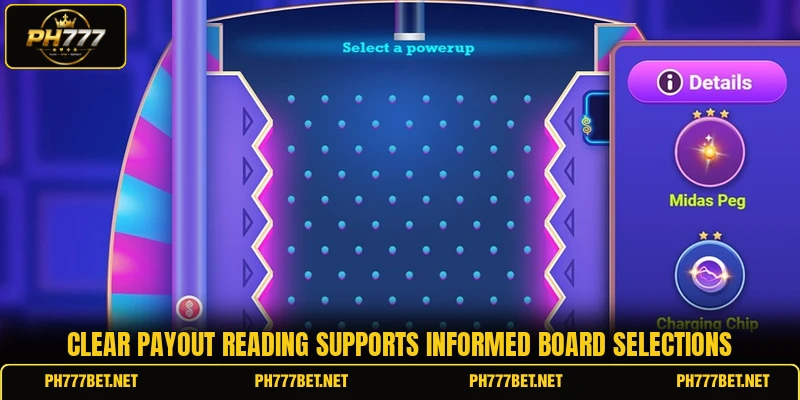
Board settings determine how many pegs, slots, multiplier values, and possible landing areas appear during a selected round. Plinko tips become easier to apply when members understand exactly what each visible control changes before selecting a stake amount.
Read the row count first
A higher row count creates a longer fall with more peg contacts before the ball reaches its final multiplier slot. This setting often produces a wider value range, although the exact numbers and spacing depend on the selected game version. Players should open the payout table and compare every visible landing area before choosing the deepest available board.
A lower row count makes each round finish faster and may display a narrower group of possible multipliers. That layout can be easier to review because fewer rows, pegs, and outcomes appear together on the main screen. Members can compare both layouts using the same small test amount, such as PHP 20 or USD 0.35, where allowed.
Plinko tips for choosing drop positions
Some versions allow members to choose a left, center, or right release point above the complete peg field. The position changes where the falling animation begins, but it should never be treated as a reliable prediction tool. A center release may look balanced, while an outside release may appear visually closer to several larger multipliers.
The important point is that visible starting placement does not remove random movement through the remaining peg rows. Players should avoid assuming that repeated releases from one side will force later balls toward the same outside edge. Comparing several positions can explain the interface clearly, but it cannot create a fixed route toward a preferred payout.
Compare risk level displays
Low, medium, and high settings usually change how multiplier values are spread across the bottom landing slots. Low risk often shows smaller differences between central and outside figures, while high risk can place larger rewards beside several weak outcomes. Members need to read the complete table because one large figure never represents the likely result of every round.
View more: Mines Demo – Clear Online Rules And Tile Selection Guide
Risk labels describe the payout structure, not the certainty of any single animated ball path. Players should check whether the selected level also changes row choices, stake limits, available multipliers, or automatic drop controls. Clear Plinko tips focus on these visible differences instead of using vague claims about lucky settings, secret patterns, or special hours.

Better methods for reading danger and payout paths
Careful board reading helps members compare possible outcomes without pretending that previous drops can predict the next result. The following Plinko tips focus on multiplier layout, round records, and screen controls that players can check directly before confirming another ball.
Check the full multiplier line
The largest multiplier often appears near an outside slot, while central spaces may show lower or moderate return values. Members should scan from left to right and note how many landing spaces return less than the original selected stake. This wider review gives a clearer picture than looking only at the maximum number displayed beside one edge.
A board showing 100x near an edge may also contain several values below 1x across more common landing areas. Players can compare that structure with a lower-risk board offering fewer extreme numbers but more moderate spaces across the center. This comparison helps members judge the displayed payout design before choosing a suitable round configuration.
Use round history carefully
A history panel may list recent multipliers, drop results, selected stakes, or total returns from completed rounds. That information can confirm whether settings changed correctly and help members review how the interface records each finished outcome. It cannot prove that a specific multiplier or landing position is due to appear next.
Players should treat short streaks as past records rather than signals that control future ball movements. Five central results do not make an outside result certain on the sixth drop, regardless of the previous animation. Sound Plinko tips use history for checking recorded information, not for building a prediction from a limited sequence.
Review speed and auto controls
Fast mode shortens visible animations, while automatic controls can repeat rounds under selected settings when that feature is available. These tools change how quickly actions happen, but they do not improve the multiplier attached to any landing slot. Members should confirm stake, row count, risk level, currency, and total round number before activating repeated drops.
Manual drop mode gives players more time to inspect every setting between consecutive results. Automatic mode may support repeated interface testing, yet an incorrect stake can also repeat quickly when the screen is not checked. Reliable Plinko tips therefore place careful screen review before speed, especially when switching between PHP and USD account balances.
View more Category: Arcade
Conclusion
Plinko tips work best when members read rows, multiplier spreads, risk labels, and control settings without treating animations or streaks as guaranteed signals. At PH777, players can use the displayed board information to compare each round type before confirming a selected amount. Register an eligible account, download the app, open the game carefully, and good luck with every responsible choice.
